Expanding D1 could help improve competition within boys and girls lacrosse divisions
In this business, I do a lot of talking, and a lot of it involves just walking right up to folks and starting a conversation.
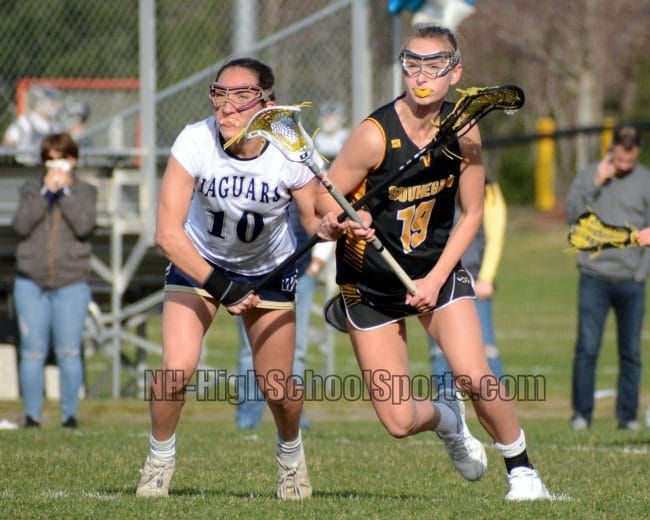
In this business, I do a lot of talking, and a lot of it involves just walking right up to folks and starting a conversation.
Never would have guessed that's the path I'd take when I was younger, because initiating conversations was not something I liked to do. In fact, I despised it. I would have rather sat in the corner and kept to myself than start up a conversation with a stranger.
Things change. You grow up. You ignore the butterflies in your stomach, or you feed off them.
Over the last few years, I've talked to a lot of coaches about lacrosse. About their teams, about their potential - or lack of - about the competition, and this year more so than ever, where lacrosse in New Hampshire is going.
It feels like the cancelation of the 2020 spring season due to COVID-19 did one of two things to programs in the state. It either galvanized them, with more players coming out and putting in the work. That doesn't sound like it was the norm, though.
What it sounds like happened to most programs is that they lost kids, particularly in what was 2022's junior and sophomore classes, and I think it came from both ends. Teams lost the diehard players, who maybe would have stayed at their respective high schools, but perhaps saw a better opportunity at prep school because of protocols.
But they also lost the kids who were going to give lacrosse a try as a freshman or a sophomore in 2020, but then didn't because there was no season. The kids who played another sport already, in the fall or the winter, but wanted to do something in the spring, and all of a sudden, there was no spring.
And not only did the spring sports lose a season in 2020, but they were lapped by the fall and the winter sports, which had two seasons in between. That had to have an impact.
There were two things that concerned coaches the most this spring - numbers and the gap between the top programs and everyone else. I asked all of them, what is the answer to fixing both problems, and most seemed to feel that the numbers might fix themselves after a couple of classes cycle through.
If the numbers keep growing in places they haven't been, maybe that helps with the second concern. Unfortunately, there doesn't seem to be any other easy answers, but I'm going to try anyway.
One coach expressed concern that lacrosse was headed down the same path as boys ice hockey in the state. The top-end talent leaves for prep schools, participation dwindles, and all of a sudden, there would be 59 schools that participate in ice hockey but only 39 programs.
Now, it's a lot easier to pick up lacrosse than ice hockey, so its easier to draw in kids at any age, but that brings us to the other concern.
Since boys lacrosse became a sanctioned sport by the NHIAA for the 1994 season, there have been 28 Division I championship games and only one (2004) hasn't had Bishop Guertin or Pinkerton in it. Since 2012, it's been a big three in boys lacrosse, with those two programs, plus Exeter, playing in every title game since.
The girls side has seen a similar run starting around the same time, although it' s been more of a big four - Bishop Guertin, Bedford, Pinkerton and Souhegan. Of the 16 title-game appearances in D1 since 2013, all but one (Exeter was the runner-up in 2015) has gone to those four teams.
I've heard a handful of different solutions, none of which I think is plausible.
And I've heard one that, at first I was dubious about, but the more I thought about it, the more it made sense, although I felt like it needed a tweak, and that's this: Expand Division I for both boys and girls lacrosse.
Right now, the enrollment cutoff to be in D1 is 1,150 or more (check out Tuesday's post on the new cycle for all the numbers), which going into the next two-year cycle, includes 14 teams for the girls and 13 for the boys.
Now if you stretch that out and make the cutoff a thousand, and you add in Bishop Guertin, then you are at 21 teams for the boys and 22 for the girls, which isn't that much different than what D1 looks like in other sports.
But you can't just stop there and say you've got the division figured out. Instead of letting teams petition up and down on their own, what I would do is use a combination of past records and some common sense.
So what I've done here is make my own divisions, based off enrollment, previous ratings, and a little bit of prior knowledge about each program. That means, who is potentially in a numbers crunch or who is expecting a down year or two in numbers.
For the rating, ideally you'd use two cycles worth (four years) of records, but since there was no 2020 and the records in 2021 "didn't count," I only used 2019 and 2022. I also weighted the wins based on division (five points for a D1 win, four for D2, three for D3), otherwise, this exercise is kind of pointless.
One other thing you'll notice. Instead of just throwing teams into one grouping together, I split teams into regional conferences. This way, teams in D1 avoid having to play all of the big three or big four in one season, unless they want to, and it makes it easier to schedule games against teams that are at the same level.
So, here they are, if I was in charge of the committees responsible for making these decisions, my boys and girls lacrosse divisions. Teams are followed by enrollment used for the next cycle and rating in parentheses. Teams with an asterisk next to the enrollment were moved up or down.
Boys Division I
East Conference
- Exeter (1,513; 4.1667)
- Portsmouth (1,040; 3.4444)
- Winnacunnet (1,139; 3.0667)
- Timberlane (1,048; 2.6000)
- St. Thomas (416*; 2.7500)
- Dover (1,548, 1.5000)
- Oyster River-Newmarket (1,135; 2.0645)
Central Conference
- Pinkerton (3,117; 3.3333)
- Derryfield (281*; 3.5152)
- Londonderry (1,363; 3.1429)
- Concord (1,515; 2.7273)
- Windham (1,062; 2.7097)
- Man. Memorial-Central (2,825; 1.8065)
- Salem (1,158; 1.2500)
West Conference
- Bishop Guertin (803*; 4.4444)
- Nashua South (1,875; 3.1944)
- Bedford (1,454; 2.1875)
- Merrimack (1,158; 2.6563)
- Goffstown (1,006; 2.3529)
- Souhegan (709*; 2.7942)
- Hanover (690*; 2.8621)
The maximum (18) and minimum (12) number of games played would remain the same. Each team plays everyone in the conference once (six games) and then plays against teams on the same line in the other two conferences (two games). For example, Pinkerton would play Exeter and Bishop Guertin while Derryfield would play Nashua South and Portsmouth. The rest of the schedule would be open to schedule however teams would like, giving them between four and 10 more games.
Playoffs would consist of 13 teams, with the three conference winners each getting a bye. The next 10 best teams, based on rating, would then get in as well.
Boys Division II
South Conference
- Hollis Brookline (833; 2.2667)
- Campbell (432*; 2.4828)
- ConVal (711; 1.7143)
- John Stark (587#; 2.2857)
- Alvirne (1,069*; 1.0667)
- Keene-Monadnock (1,802*; 0.3226)
- Nashua North (1,690*; 0.2857)
North Conference
- Coe-Brown (697, 1.8571)
- Hopkinton (322*; 2.6786)
- Kingswood (735; 1.8571)
- Merrimack Valley (794; 1.8571)
- Bow (630; 1.2000)
- Kennett (730; 0.8571)
- Spaulding (1,331*; 0.0000)
The maximum (18) and minimum (12) number of games played would remain the same. Each team plays everyone in the conference once (six games) and then plays against two teams from the other two conferences (two games). The rest of the schedule would be open to schedule however teams would like, giving them between four and 10 more games.
Playoffs would consist of nine teams, with the two conference winners getting the top two seeds and then the next seven best teams, determined by rating. Bottom two seeds would play a play-in game.
Boys Division III
South Conference
- Pelham (580; 2.4643)
- Trinity (331; 1.7143)
- Pembroke (752*; 0.4286)
- Bishop Brady (242; 0.5357)
- Milford (780*; 0.7778)
- Hillsboro-Deering (373; 0.2143)
North Conference
- Laconia (589; 2.2500)
- Plymouth (626; 1.7586)
- Lebanon (614; 1.2857)
- Kearsarge (515; 1.5000)
- Gilford (494; 1.0714)
- Inter-Lakes/Moultonborough (436; 0.9643)
- Stevens (546; 0.0000)
The maximum (18) and minimum (12) number of games played would remain the same. Each team plays everyone in the conference twice (12 games for the North, 10 games for the South). The rest of the schedule would be open to schedule however teams would like, giving them between four and 10 more games.
Playoffs would consist of nine teams, with the two conference winners getting the top two seeds and then the next seven best teams, determined by rating. Bottom two seeds would play a play-in game.
A little bit different, but here are the girls.
Girls Division I
East Conference
- Portsmouth (1,040; 3.5556)
- Exeter (1,513; 2.6389)
- Dover (1,548; 2.3438)
- Winnacunnet (1,139; 2.6250)
- Oyster River-Newmarket (1,135; 2.6207)
- Timberlane (1,048; 1.1935)
- Man. Central (1,342; 1.875)
Central Conference
- Bedford (1,454; 4.5313)
- Pinkerton (3,117; 4.4118)
- Londonderry (1,363; 2.7778)
- Concord (1,515; 2.2727)
- Windham (1,062; 2.6250)
- Goffstown (1,006; 2.4516)
- Salem (1,158; 0.9375)
West Conference
- Bishop Guertin (803*; 4.5588)
- Souhegan (709*; 3.9063)
- Hollis Brookline (833*; 3.2500)
- Nashua South (1,875; 3.3333)
- Hanover (690*; 2.6667)
- Merrimack (1,158; 2.1212)
- Nashua North (1,690; 1.0000)
The maximum (18) and minimum (12) number of games played would remain the same. Each team plays everyone in the conference once (six games) and then plays against teams on the same line in the other two conferences (two games). For example, Bedford would play Portsmouth and Bishop Guertin while Pinkerton would play Souhegan and Exeter. The rest of the schedule would be open to schedule however teams would like, giving them between four and 10 more games.
Playoffs would consist of 13 teams, with the three conference winners each getting a bye. The next 10 best teams, based on rating, would then get in as well.
Girls Division II
South Conference
- Pembroke (752; 2.1429)
- Derryfield (218*; 2.3333)
- John Stark (587; 1.8571)
- ConVal (711; 1.5714)
- Keene-Monadnock (1,802*; 0.7407)
- Man. Memorial-West (2,260*; 0.2500)
- Alvirne (1,069*; 0.2667)
North Conference
- Kingswood (735; 2.1429)
- Hopkinton (322*; 2.8929)
- Bow (630; 2.5862)
- Kennett (730; 1.7143)
- Coe-Brown (697; 1.2857)
- Merrimack Valley (794; 0.8571)
- Spaulding (1,331*; 0.5517)
The maximum (18) and minimum (12) number of games played would remain the same. Each team plays everyone in the conference once (six games) and then plays against two teams from the other two conferences (two games). The rest of the schedule would be open to schedule however teams would like, giving them between four and 10 more games.
Playoffs would consist of nine teams, with the two conference winners getting the top two seeds and then the next seven best teams, determined by rating. Bottom two seeds would play a play-in game.
Girls Division III
South Conference
- Pelham (580; 1.9286)
- St. Thomas (416; 1.8621)
- Campbell (432; 1.6552)
- Milford (780*; 0.8889)
- Bishop Brady (242; 0.4286)
- Trinity (331; 0.2000)
- Concord Christian (106; 0.0000)
North Conference
- Kearsarge (515; 1.9655)
- Gilford (494; 1.8621)
- Lebanon (614; 1.7143)
- Laconia (589; 1.5000)
- Plymouth (626; 1.1379)
- Inter-Lakes/Moultonborough (436; 0.7500)
- Hillsboro-Deering (373; 0.0000)
The maximum (18) and minimum (12) number of games played would remain the same. Each team plays everyone in the conference twice (12 games). The rest of the schedule would be open to schedule however teams would like, giving them between four and 10 more games.
Playoffs would consist of nine teams, with the two conference winners getting the top two seeds and then the next seven best teams, determined by rating. Bottom two seeds would play a play-in game.