The three-division format for football is working, but here are a few changes
This month wrapped up the fourth year of the NHIAA's current three-division format for high school football, and showed once again why it's been an improvement over the previous system.
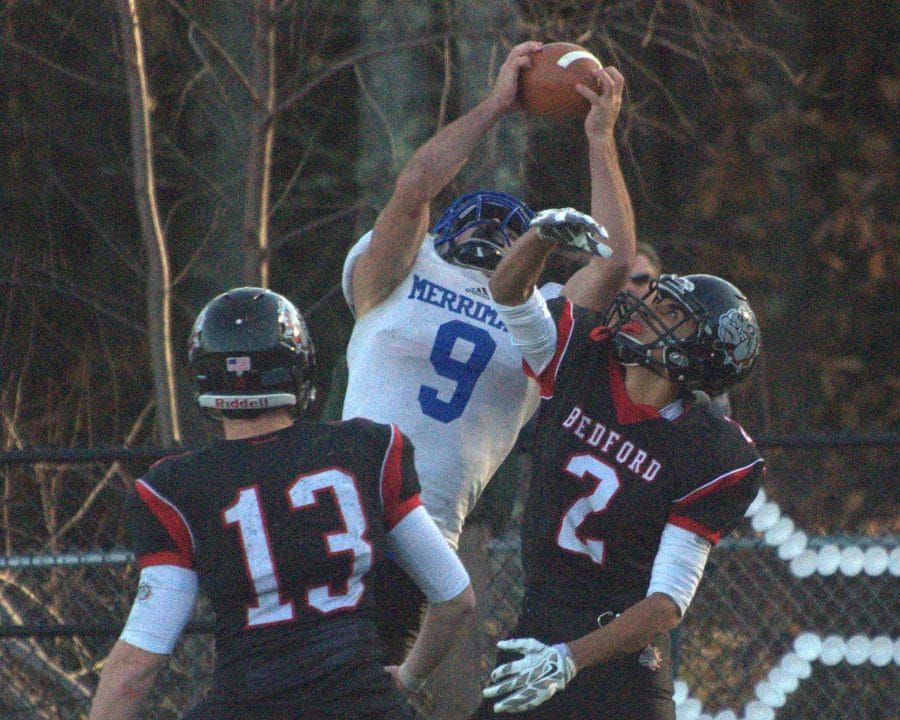
This month wrapped up the fourth year of the NHIAA's current three-division format for high school football, and showed once again why it's been an improvement over the previous system.
Those improvements begin with the championship games themselves, as the three finals were played at the University of New Hampshire for the third year in a row. While the games have been a mix of close battles and one-sided affairs, the overall atmosphere of the venue and the crowd has made for a special afternoon for those involved.
If there were still six divisions, and six championship games, then perhaps the games wouldn't be played at UNH at all, or maybe spread over two weekends. Either way, it would lessen the experience that the high school football teams in the state now have.
And let's look at those teams that have played for a championship the last four years.
There have now been a dozen title games played over the last four years, and while 14 of the 58 teams in the state have played in the final during that stretch, there have been 11 different champions. Plymouth, which won this year and in 2013, is the only team to have repeated as champion in the last four years.
Four teams - Goffstown, Bedford, Windham and Campbell - won their program's first championship, while Concord won its first in 13 years back in 2013, and Stevens took home its first title since 1968 this year.
In Division I, 17 of the 20 teams have made the postseason, while 10 of those 17 have won at least one playoff game.
In Division II, 14 of the current 22 teams have participated in the playoffs, with nine of those teams winning a playoff game. That number goes to 16 if Pelham and Gilford-Belmont, which made the playoffs in Division III, are included.
In Division III, 11 of 16 teams have made the postseason, including Kearsarge, which was a D2 participant.
Overall, 42 of the state's 58 teams have played at least one postseason game since 2013.
How does that compare to the six-division format, which started in 2008?
From 2008-12, 18 different teams won 30 championships, with Trinity winning a title in Division IV and V, and 31 teams played for a division title.
But if you go back even further, to 2002, there becomes even less parity among the teams. During that 11-year stretch, there were 57 championship games played, and the same seven teams - Plymouth, Bishop Guertin, Exeter, Pinkerton, Souhegan, Manchester Central and Hanover - won 34 of those titles.
So while having just three divisions makes it harder for a team to win a championship, the opportunity to win one has increased.
That said, there are still some changes that could be made to each division that would improve what has already been a good product.
Division I: Seed playoff teams based on rating.
In other words, seed the D1 playoffs the same way the D2 playoffs are done. This would eliminate a few bugs in the current system.
First, it would get rid of the potential scenario of the two best teams meeting in the semifinals instead of the championship game.
Second, it would allow conference foes to meet in the championship game, which currently can't happen. The potential for an all-Nashua final, or an Exeter-Winnacunnet final, or a Goffstown-Bedford final, should exist.
Finally, it would make every game during the regular season mean something, which wasn't the case this year. Going into the last week of the season, games between Goffstown-Merrimack and Salem-Bedford were meaningless because those were going to be the matchups for the D1 quarterfinals.
If this year's field included the top eight teams based on rating, it would have looked like this.
- No. 8 Nashua South (10.67) at No. 1 Bedford (18.00)
- No. 5 Goffstown (12.44) at No. 4 Nashua North (13.11)
- No. 7 Dover (10.89) at No. 2 Exeter (16.00)
- No. 6 Bishop Guertin (11.33) at No. 3 Merrimack (15.11)
Only one change in terms of teams in the field (Dover in, Salem out), but a completely different bracket in terms of playoff matchups.
Division II: Decrease the number of teams in the division.
Can we all agree that 22 teams is too many for one division? Especially when it means teams in the same conference aren't playing anything close to the same schedule and it has an affect on the playoff seeding.
The questions then are how many teams get moved, and where do they go. If this were to happen for next season, no team should be moving up to D1 - let's save that discussion about Windham for after the 2017 season.
So that means teams would move down to D3, which makes more sense, since there are only 16 teams in the division.
There are two teams that look like excellent candidates. Manchester West, despite its enrollment of close to a thousand students, has lost 23 of its last 24 games, and might get a shot in the arm from dropping down.
The other is Hillsboro-Deering/Hopkinton, which has a combined enrollment of 656, and was a first-year varsity program last season. Typically, those teams have been allowed to start out in smaller divisions and move up.
While two teams would be a good start, four teams makes sense, too, but answering the question of which ones is tricky. Gilford had been in D3 before adding Belmont and bumping its enrollment up to over nine hundred, but it would be a candidate. Pembroke, Kingswood and Pelham have struggled in D2 in recent years, but the first two are some of the larger schools in the division.
And by all accounts, the D3 programs like being able to have a bye week during the regular season, something that would probably disappear if the division grew by four teams.
Division III: Once again, it's the seeding.
Aside from bumping the division up to 18 teams, the seeding for the playoffs might benefit from a slight change.
The D3 playoffs already crossover between the North and South conferences, with the higher seeds from one hosting the lower seeds from the other. But it also means that if the fifth team from one conference is better than the third or fourth from the other, it misses out.
Such was this year, as Kearsarge, which was fifth in the North, had a better rating than both Winnisquam and Somersworth, which made the playoffs out of the South.
If the playoffs were open to the top eight teams, regardless of conference, the bracket would have looked like this.
- No. 8 Winnisquam (9.25) at No. 1 Monadnock (18.00)
- No. 5 Campbell (11.75) at No. 4 Stevens (12.00)
- No. 7 Kearsarge (9.50) at No. 2 Bishop Brady (14.50)
- No. 6 Newport (9.75) at No. 3 Inter-Lakes/Moultonborough (13.00)
No change for the top five teams, but a few changes on match ups with the three bottom seeds changing.
But whatever changes are made - or not made - to the three-division format, it should be another exciting season of football.