NHIAA deserves credit for changes to football playoffs
There are many things over the years in New Hampshire high school sports that make you want to just shake your head.
There are many things over the years in New Hampshire high school sports that make you want to just shake your head.
And for many of those times, the NHIAA has taken the blame. But this time, with the changes made to the football playoffs, the organization got it right.
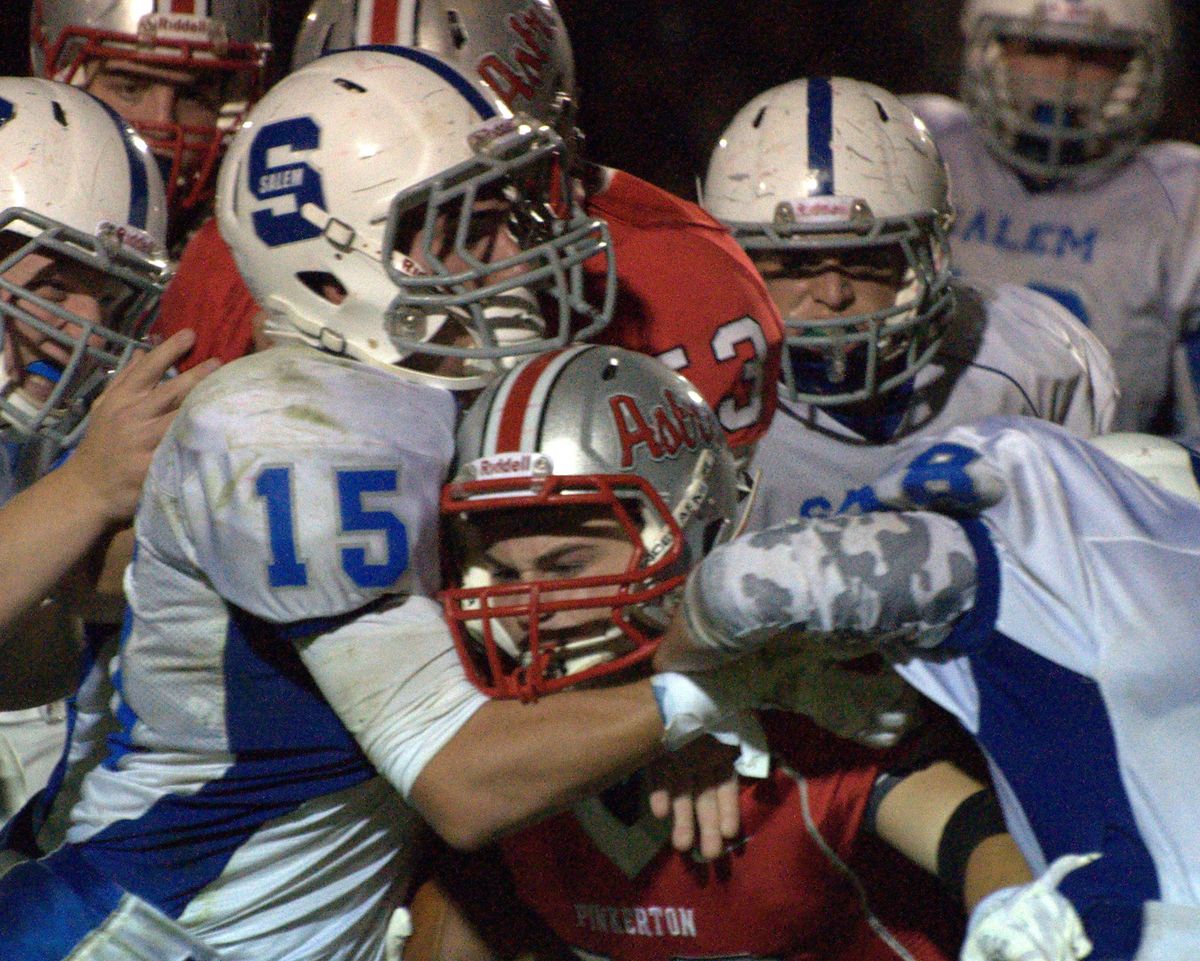
It was obvious after two years of the playoff format in the three-division setup that something had to change. In both years, a team that finished 7-2 in Division I (Bedford in 2013, Salem in 2014) missed the playoffs, while teams that went 4-5 (and lost to those non-playoff teams) got into the postseason.
There was a similar problem in Division II, where four of the best eight teams played in one conference, but only two could make the playoffs.
Now, those problems are gone, thanks to the changes that were made this offseason to the playoff format in each division. Not often does the organization move that quickly to right a wrong, but in this case, it did.
And it was the right call by the NHIAA, because not only does it solve the problem of getting the best teams into the postseason, it allows teams in Division I and II to continue playing everyone.
There was a call from some members of the media to condense both divisions into two conferences, much like was done in Division III before the 2014 season.
Except, in Division II, that wouldn't work, thanks to an odd number of teams. While one conference would have been able to play a nine-game schedule against everyone else in the conference, that wouldn't be the case on the other side.
With 21 teams in the division, one conference was guaranteed having on extra team, and therefore, one fewer games on the schedule.How do you go into a postseason with one conference playing one fewer game than the other?
By keeping the conferences the way they are, it avoids that problem in D2 and allows teams to continue to schedule their own non-conference games.
For D1, since teams are scheduled games against their conference foes and one other conference, condensing conferences would have meant that teams would be playing the same nine teams every year.
It's bad enough that the Manchester and Nashua schools haven't played since 2012, or that Exeter and Pinkerton haven't played since that same year. By creating two 10-team conferences, there were several matchups that would never happen again, unless it was in a championship game.
For some schools that have had storied rivalries going back decades, that just couldn't have been acceptable.
As for the change in D3, it didn't seem necessary, unless you believe that Campbell, the division champion, and Bow were the two best teams in the division last year. If that's the case, having them in the same conference and playing in the semifinal instead of the title game would be a little disappointing.
The new format of crossing over between the two conferences for the playoffs opens the door for two teams - like Campbell and Bow - from the same conference to meet in the title game. It's a move that makes you wonder, would the NHIAA have done the same thing for the other two divisions if it had gone the two-conference route?
Regardless, the changes that were made were the right ones, a move that was nicely done by the NHIAA. If nothing else, we'll know how well it works before Thanksgiving.